Products or systems that are liquid filled must be leak tested before processing. Developing a consistent, effective leak testing method that integrates with your manufacturing process isn’t a one size fits all proposition. Optimizing your leak testing process could require a combination of tests – from vacuum decay, pressure, pressure decay, helium leak detection, to capillary flow rate testing. Our leak testing stations and helium recovery and recycling equipment support all these leak detection operations.
Utilizing our DataServ software to load or modify test process, record test results, sort failures, monitor other testing systems, and automatically send email notifications for failure trends has become an integral part of our customers quality control systems.
If you need to improve product quality, increase first pass yields, reduce repairs, returns and warranty claims, our Leak Test stations can be designed to assist in meeting your goals.
Amanda Bevilacqua
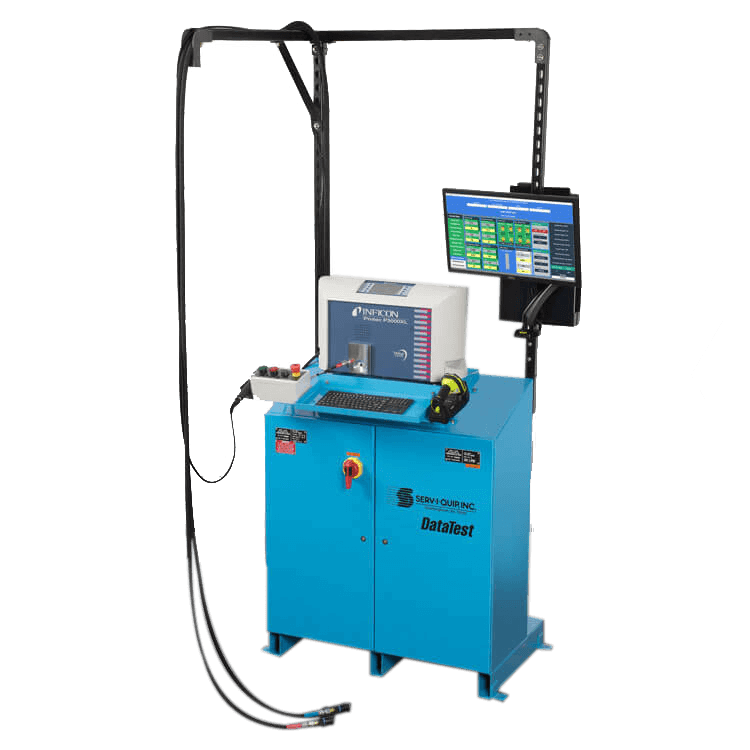
The addition of DataServ 3.0 to our comprehensive leak test station greatly expands the capability of this product.
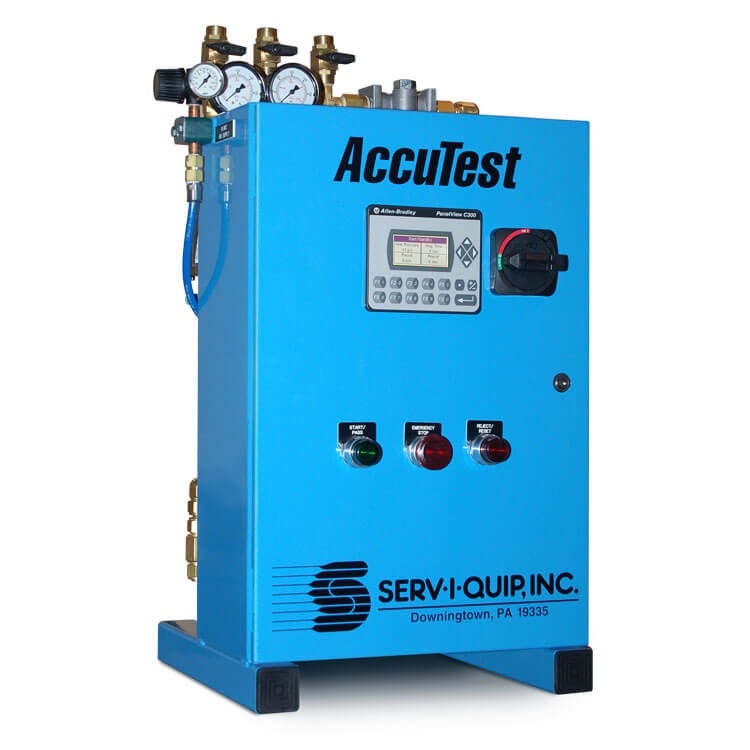
This compact system delivers a comprehensive leak test process in an economical but durable control package. The adjustable leak test process performs a pressure test, pressure decay test, and tracer gas fill.
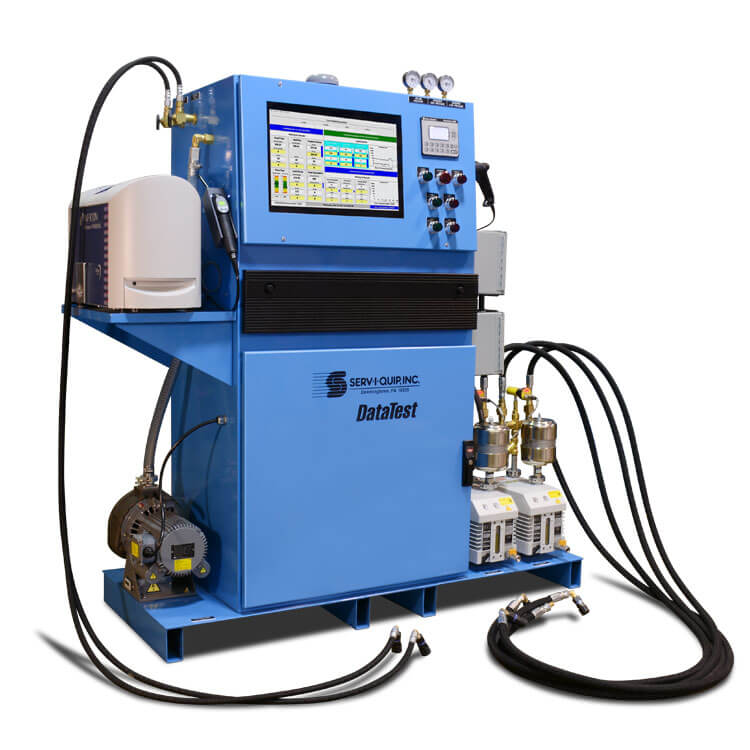
These systems can be configured to accommodate multiple units in a mixed production environment and automatically sequenced to provide a comprehensive, efficient leak testing process.
Ready to take the next step and learn more about what Serv-I-Quip can do and how we can help you with your business?